I got this post from Yahoo Men'sHealth this month of June: "The 10 Dirtiest Foods You're Eating".
I'm not that health expert, but this information may probably made you think that sometimes we ate foods which are most common cause of food poisoning in the world.
The Centers for Disease Control and Prevention in America estimates that 200,000 Americans contract food poisoning every day. But Philip Tierno, Ph.D., a microbiologist at New York University medical center and author of The Secret Life of Germs, believes the actual number is closer to 800,000.
And in 4 of 5 of food poisoning cases, the attack happens at home—right (on the plate) under your nose.
These are the Top 10 Dirtiest Foods You're Eating:
Chicken (Manok)
The dirt: The Consumers Union, the advocacy group behind Consumer Reports, recently tested 484 raw broiler chickens—the kind that show up in supermarket coolers—and found that 42 percent were infected by Campylobacter jejuni, and 12 percent by Salmonella enterides.
The latest USDA research notes similar Salmonella levels. Now add in the fact that we each consume about 70 pounds of chicken a year—more than our intake of beef, pork, or turkey—and it's a wonder broilers don't come with barf bags.
At the supermarket: Look for birds labeled "free range." Close quarters in the henhouse give bad bugs the chance to spread, as do high-volume processing operations. Free-range chickens, which are given more room to roost and are usually slaughtered in smaller numbers, present a potentially safer option. For example, Ranger chickens, a free-range brand sold in the Pacific Northwest, came up negative for Salmonella and Campylobacter in Consumers Union's tests.
At home: To help prevent foodborne illness, bypass rinsing your raw bird in the sink, and instead put it directly into a baking dish or pan. This shortcut reduces the odds of sullying counters and other foods, says Janet B. Anderson, R.D., director of the Safe Food Institute in North Logan, Utah. If you used a cutting board, clean it (and the knife) with a mild, dilute bleach solution. As for your heat treatment, cook breasts and other cuts until the temperature hits 180°F. (If it's a whole bird, take the temperature in the thickest part of the thigh.
Ground Beef (Baka)
The dirt: When USDA inspectors last tested hamburger meat, they looked at 563 sources nationwide and discovered Clostridium perfringens in 53 percent of the batches, Staphylococcus in 30 percent, and Listeria monocytogenes in 12 percent. Interestingly, the USDA found no trace of Escherichia coli 0157:H7, a.k.a. E. coli, one of the desperadoes of foodborne illness. Despite this finding, if slaughterhouse safeguards fail (and they sometimes do), E. coli could potentially pop up in your next patty.
At the supermarket: "Find a grocery store that sells irradiated ground beef," says Donald W. Schaffner, Ph.D., an extension specialist in food science at Rutgers University. The package will bear the words "treated by irradiation." Schaffner gives the safety of the treatment a glowing review: "The amount of induced radioactivity is 200,000 times smaller than the level of radioactivity naturally present in all foods."
At home: Add fresh oregano to your burgers and meat loaf. When researchers at Kansas State University mixed a variety of common household spices into ground beef to test their antibacterial properties, oregano tested as one of the best at wiping out E. coli. Use at least 1 tablespoon per pound of meat. Just as important, flatten your patties—thick burgers will char on the outside before the interior reaches the required 160°F.
Ground Turkey (Pabo)
The dirt: According to the USDA, the odds are better than 1 in 4 that your ground gobbler contains Listeria, Campylobacter, Clostridium, or some combination of the three. What's more, in a separate study by the FDA and the University of Maryland, 24 percent of the ground turkey sampled came back positive for Salmonella. And some of that Salmonella was resistant to antibiotics.
At the supermarket: Hunt for organic turkey. Most commercial turkey processors pump up their birds with antibiotics, a practice that may have encouraged the rise of resistant bacteria. Organic outfits, on the other hand, say no to drugs. When you reach the checkout, insist that the turkey be slipped into its own plastic bag and then placed in a meat-only shopping bag. This rule applies to beef and chicken, too: Otherwise, meat drippings might contaminate other groceries.
At home: "Start by thinking of it as being contaminated," says Schaffner. Immediately retire to the dishwasher any platter that has come in contact with raw ground turkey. (Use the hottest setting.) Serve cooked turkey burgers (180°F) on a clean plate. And wipe up any spillage with a paper towel instead of a sponge. "The sponge is the most dangerous item in the house because of the organisms potentially living in it," says Tierno.
Oysters (Talaba)

The dirt: Oysters' power as an aphrodisiac is overblown, but their power as a diarrheic when slurped raw is not. They can contain the norovirus (a pathogen notorious for nixing ocean cruises), Campylobacter, and Vibrio vulnificus. University of Arizona researchers who studied oysters from so-called certified-safe beds discovered that 9 percent were contaminated with Salmonella bacteria. Still hungry? "We found E. coli in 100 percent of Gulf Coast locations, and in high amounts," says Lynn Joens, Ph.D., the study author.
At the supermarket: Buy from the same beds that a chef stakes his reputation on. Sandy Ingber, executive chef and seafood buyer for Grand Central Oyster Bar in New York City, buys Blue Point, Chincoteague, Glidden Point, Narragansett Bay, Pemaquid, and Wellfleet oysters in the winter months. During summer, he buys Coromandel oysters from New Zealand. The reason for the seasonal shift: More than three-quarters of outbreaks involving raw oysters occur in the Northern Hemisphere's warm-water months.
At home: Very simple: Eat only thoroughly cooked oysters. If you must slurp, do so only after following the buying advice above.
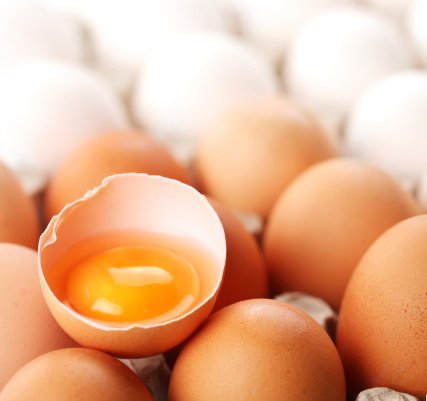
Eggs (Itlog)
The dirt: Widespread pasteurization has reduced the rate of Salmonella contamination in eggs to only one in 20,000. But that still leaves more than 2 million hazardous eggs in circulation each year. Food poisoning linked to eggs sickens an estimated 660,000 people annually and kills 300. "Often, dishes made at restaurants are from pooled eggs," which increases the risk, says Schaffner. "It's really a matter of statistics. Eat an egg sunny-side up and your risk of Salmonella is one in 10,000. Eat an undercooked omelette made from a mix of 100 eggs, and the risk is significantly higher."
At the supermarket: Check the egg cartons. You're looking for one word—"pasteurized"—and four numbers: the expiration date. Then remove each egg and look for cracks; germs can enter after pasteurization.
At home: Ignore the egg keeper on the refrigerator door. Instead, keep the eggs in their carton and stow it in the coldest part of your fridge (usually the back of the lowest shelf). Then, after you crack one open, wash your hands. In her study of household food preparation, Utah State's Anderson reports that 60 percent of people failed to wash their hands after handling raw eggs. Finally, cook your eggs thoroughly—or, if they're an ingredient in a dish, to 160°F.
Cantaloupe (Melon)
The dirt: When the FDA sampled domestically grown cantaloupe, it found that 3.5 percent of the melons carried Salmonella and Shigella, the latter a bacteria normally passed person-to-person. Among imported cantaloupe, 7 percent tested positive for both bugs. And because you eat melons raw, the bacteria go right down your gullet. That's a big part of the reason why from 1990 to 2001, produce in general has sickened as many people as have beef and poultry combined.
At the supermarket: Dents or bruising on the fruit can provide a path in for pathogens. But don't think precut cantaloupe is safer. "I've been in several supermarkets where the produce was cut by personnel who didn't wash their hands after handling eggs and other items," says Anderson.
At home: Because cantaloupe grows on the ground and has a netted exterior, it's easy for Salmonella to sneak on, and once on, it's hard to clean off. Scrub the fruit with a dab of mild dishwashing liquid for 15 to 30 seconds under running water. And make sure you buy a scrub brush that you use exclusively to clean fruits and vegetables; otherwise, it could become cross-contaminated.
Peaches (Melokoton)
 The dirt: Being pretty as a peach comes at a price. The fruit is doused with pesticides in the weeks prior to harvest to ensure blemish-free skin. By the time it arrives in your produce department, the typical peach can be coated with up to nine different pesticides, according to USDA sampling. And while apples tote a wider variety of pesticides, the sheer amount and strength of those on peaches sets the fuzzy fruit apart. On an index of pesticide toxicity devised by Consumers Union, peaches rank highest.
At the supermarket: Fill your plastic produce bag with peaches that wear a "USDA Organic" sticker. And since apples, grapes, pears, and green beans occupy top spots on the Toxicity Index, too, you may want to opt for organic here as well. Just know that organic produce also contains some pesticide residues, but in minuscule amounts.
At home: "A lot of produce has a natural wax coating that holds pesticides, so wash with a sponge or scrub brush and a dab of mild dishwashing detergent. This can eliminate more than half of the residues," says Edward Groth III, Ph.D., a senior scientist with Consumers Union. Got kids? Play it extra safe, and wash and pare peaches, apples, and pears.
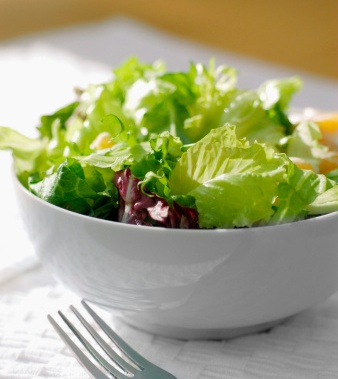
Lettuce (Litsugas)
The dirt: The lettuce on a burger could cause you more grief than the beef. According to the Center for Science in the Public Interest, lettuce accounted for 11 percent of reported food-poisoning outbreaks linked to produce from 1990 to 2002, and "salad" accounted for 28 percent.
At the supermarket: Prepackaged salad mix is not inherently more hazardous than loose greens or a head of lettuce. It's the claims of being "triple washed" that lull consumers into complacency. "Just because something is wrapped in cellophane doesn't mean it's free of pathogens," says J. Glenn Morris, M.D., chairman of epidemiology and preventive medicine at the University of Maryland school of medicine.
At home: Rinse salad greens one leaf at a time under running water before eating. Beware of cross-contamination, too. "People know it's risky to put salad in the same colander they washed chicken in," says Anderson, "but they think nothing of touching a towel used to wipe up poultry juice, then making a salad."
Cold Cuts
The dirt: Cold cuts have been labeled at "high risk" of causing listeriosis by a joint team of researchers from the USDA, FDA, and CDC. While only 3 percent of the deli meats sampled contained Listeria at the point of purchase, the bacteria's rapid growth rate on cuts stored even under ideal conditions concerned researchers. Combine that with the fact that cold cuts are, well, eaten cold, and you've got trouble; Listeria thrives at refrigerator temperatures that stun other foodborne pathogens.
At the supermarket: The most likely source of Listeria-contaminated cold cuts is the deli slicer. Without regular cleaning, the blade can transfer bacteria from roast beef to turkey to pastrami and back. But aside from asking the clerk to stop and clean the slicer before handling your order, the best you can do is avoid delis that are obviously dirty and stick with those that are annoyingly busy. Meats that rotate through a deli quickly have less opportunity to bloom with Listeria.
At home: Skip the sniff test and trash whatever meat you haven't eaten in a week. When you're ready to build your sandwich, slather on the mustard. Researchers at Washington State University killed off 90 percent of three potent pathogens—Listeria, E. coli, and Salmonella—within 2 hours of exposing them to a mustard compound.
Scallions (Sibuyas na Mura)
The dirt: Scallions play a bit part in most dishes, but a little goes a long way, as evidenced by the massive hepatitis A outbreak at that Chi-Chi's in 2003. Dirty scallions have also triggered small hep A outbreaks in Georgia, North Carolina, and Tennessee. Other bugs known to have grabbed a ride on green onions include the parasite Cryptosporidium, Shigella, and the ever-present Salmonella.
At the supermarket: Buy refrigerated scallions; room temperature can trigger a bacterial explosion.
At home: Turn on your faucet full force to blast away visible dirt. As you rinse, remove the outer sheath to expose lingering microorganisms, but realize that any step short of thorough cooking is only a partial solution. "More and more,” says Caroline Smith DeWaal, director of food safety at the Center for Science in the Public Interest, “pathogens are entering produce like scallions at a cellular level."
Source:



 The dirt: Being pretty as a peach comes at a price. The fruit is doused with pesticides in the weeks prior to harvest to ensure blemish-free skin. By the time it arrives in your produce department, the typical peach can be coated with up to nine different pesticides, according to USDA sampling. And while apples tote a wider variety of pesticides, the sheer amount and strength of those on peaches sets the fuzzy fruit apart. On an index of pesticide toxicity devised by Consumers Union, peaches rank highest.